Creating a functional outdoor oasis in the Bayou City requires a clear financial roadmap to ensure your vision aligns with your bank account. Because our regional climate demands specific weather-resistant materials, understanding the local cost drivers is essential for any successful backyard transformation.
A well-planned budget prevents mid-project stalls and ensures that every dollar spent contributes to both your lifestyle and your home’s resale value. By accounting for Houston’s unique soil conditions and drainage requirements early on, you can build a resilient space that stands the test of time.
Defining Your Primary Material Costs
The foundation of your budget rests on the square footage and the specific surfacing material you choose for the floor. In Southeast Texas, price points vary significantly between basic gray concrete, decorative pavers, and high-end natural stone slabs.
- Allocate a higher portion of the budget for stamped or stained concrete if you want the look of stone without the premium price of individual masonry.
- Research the current market rates for travertine or slate, as these materials naturally stay cooler under the intense Texas sun.
- Factor in the cost of a high-quality sealant to protect your investment from the heavy rainfall and high humidity levels characteristic of the Gulf Coast.
Choosing the right base material early allows you to see how much room remains for vertical features and landscaping.
Accounting for Essential Drainage and Foundation Work
Houston’s expansive clay soil and flat topography make proper site preparation a non-negotiable expense in your construction budget. Failing to account for water runoff can lead to foundation issues for both your new patio and your existing home structure.
- Include a line item for professional grading to ensure water flows away from your back door during heavy thunderstorms.
- Budget for the installation of French drains or catch basins if your backyard tends to hold standing water after a typical afternoon downpour.
- Consider the cost of a thicker gravel sub-base to provide better stability against the “shrink-swell” cycle of local soils.
Investing in what lies beneath the surface is the best way to prevent expensive cracking or shifting in the years to come.
Integrating Weather Protection and Shade Features
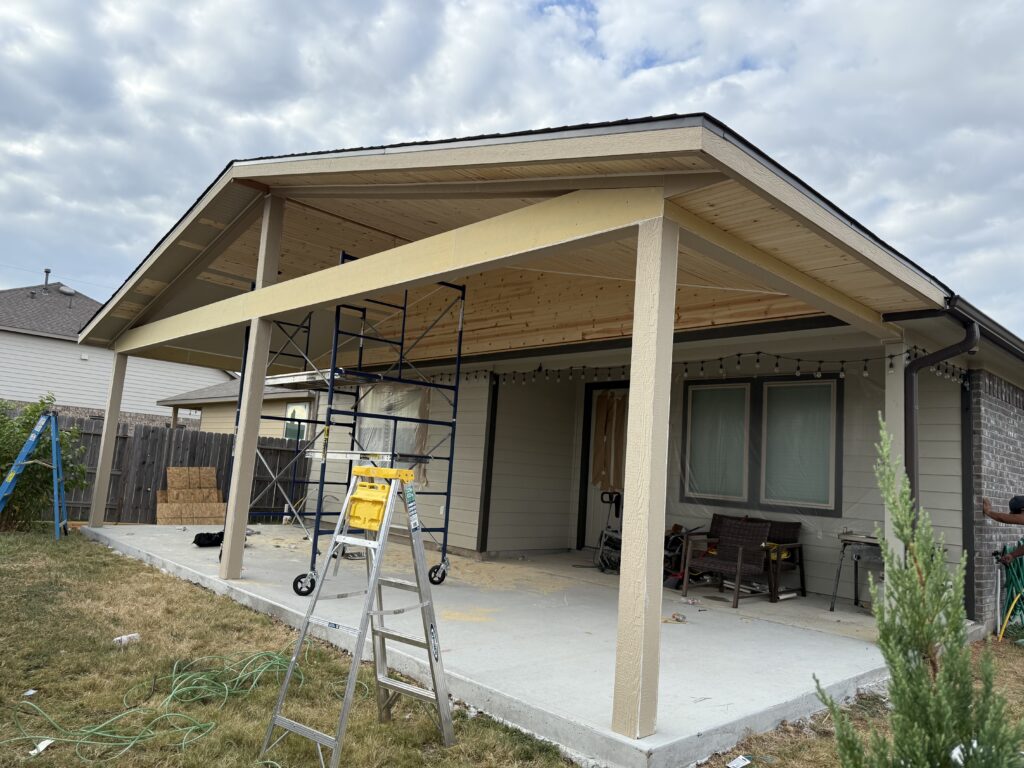
A patio in Houston is rarely usable year-round without some form of protection from the heat and sudden rain showers. Whether you opt for a simple pergola or a fully integrated roof extension, these structures often represent the largest variable in a construction budget.
- Set aside funds for a permanent patio cover or “Texas Lanai” if you plan on using the space during the peak summer months.
- Explore the costs of heavy-duty ceiling fans and outdoor-rated misting systems to improve airflow and lower the ambient temperature.
- Estimate the price of motorized screens or fixed mesh panels to keep local pests at bay while maintaining a breeze.
Adding shade not only increases your comfort but also protects your outdoor furniture and flooring from UV damage.
Planning for Utility Extensions and Lighting
If your dream backyard includes an outdoor kitchen, a fire pit, or even just a few weatherproof outlets, you must budget for licensed trades. Extending gas, water, and electrical lines from the main house requires careful coordination and specific municipal permits.
- Consult with a professional to estimate the cost of trenching through your yard to reach the new patio location.
- Budget for LED hardscape lighting and path lights to ensure the space is safe and inviting after the sun goes down.
- Factor in the fees for a dedicated circuit if you plan to install high-draw appliances like an outdoor refrigerator or a powerful grill.
Hidden infrastructure costs can add up quickly, so it is wise to get these estimates before finalizing your decorative choices.
Navigating Permitting and Homeowner Association Fees
Many Houston neighborhoods are governed by strict HOAs that require architectural review and specific filing fees before any dirt is moved. Additionally, the City of Houston or surrounding county jurisdictions may require building permits for structures that involve roofing or electrical work.
- Check your specific deed restrictions for any limitations on patio size, material colors, or “setback” requirements from property lines.
- Include a small contingency fund for permit application fees and any potential survey updates required by the local building department.
- Verify if your project requires a drainage plan signed by an engineer, which is a common requirement in flood-prone areas.
Staying compliant with local regulations protects you from fines and ensures a smooth process when it comes time to sell your home.
Achieving Lasting Value Through Smart Planning
A carefully constructed budget is the bridge between a simple concrete slab and a sophisticated outdoor retreat that elevates your daily life. By prioritizing durable materials and proper site prep, you create a space that handles the local climate with ease while providing a high return on investment.
Your new patio should be a source of relaxation rather than financial stress. Taking the time to research local costs and prepare for the unique challenges of the Houston landscape ensures that your finished project is exactly what you envisioned for your home.